

“That was the most electric vibe I’ve ever experienced at Paris Fashion Week!!” Lucy Maguire, my comrade at Vogue Business, gushes over text. It’s seconds after curtains at the August Barron show – an off-schedule but very on-radar happening at a coal yard turned concert hall on the northern fringe of the Périphérique. “The energy in the room was so palpable.”
I read her message while rising from my seat. Not on the front row, mind you, but rather in the back of a Toyota Prius, which has just pulled up outside. Despite my 10.30pm dash from a runway on the opposite side of the ring road, I did not make it to see the show that colleagues have since described as a career highlight to attend.
My first proper look at the collection itself comes the next morning in their Marais showroom, groggy from spending a little too long at the afterparty that the show blurred into and still a bit grumpy for having missed it. Why was I in such a huff? Well, in case you aren’t familiar, August Barron is the Paris-based It label fronted by New York-born Benjamin Barron and Bror August Vestbø, originally from Oslo. Although the roots of their practice stretch back about a decade, since around 2021 they’ve established themselves as key motivators of an undercurrent that has brought a sense of irreverence and fun back to a city known, in fashion at least, for its penchant for haughty sincerity and severity. Equal parts glamour and grunge, their work subverts familiar formulae, setting a new, unexpected template for chic. The August Barron show is a hot ticket, basically.
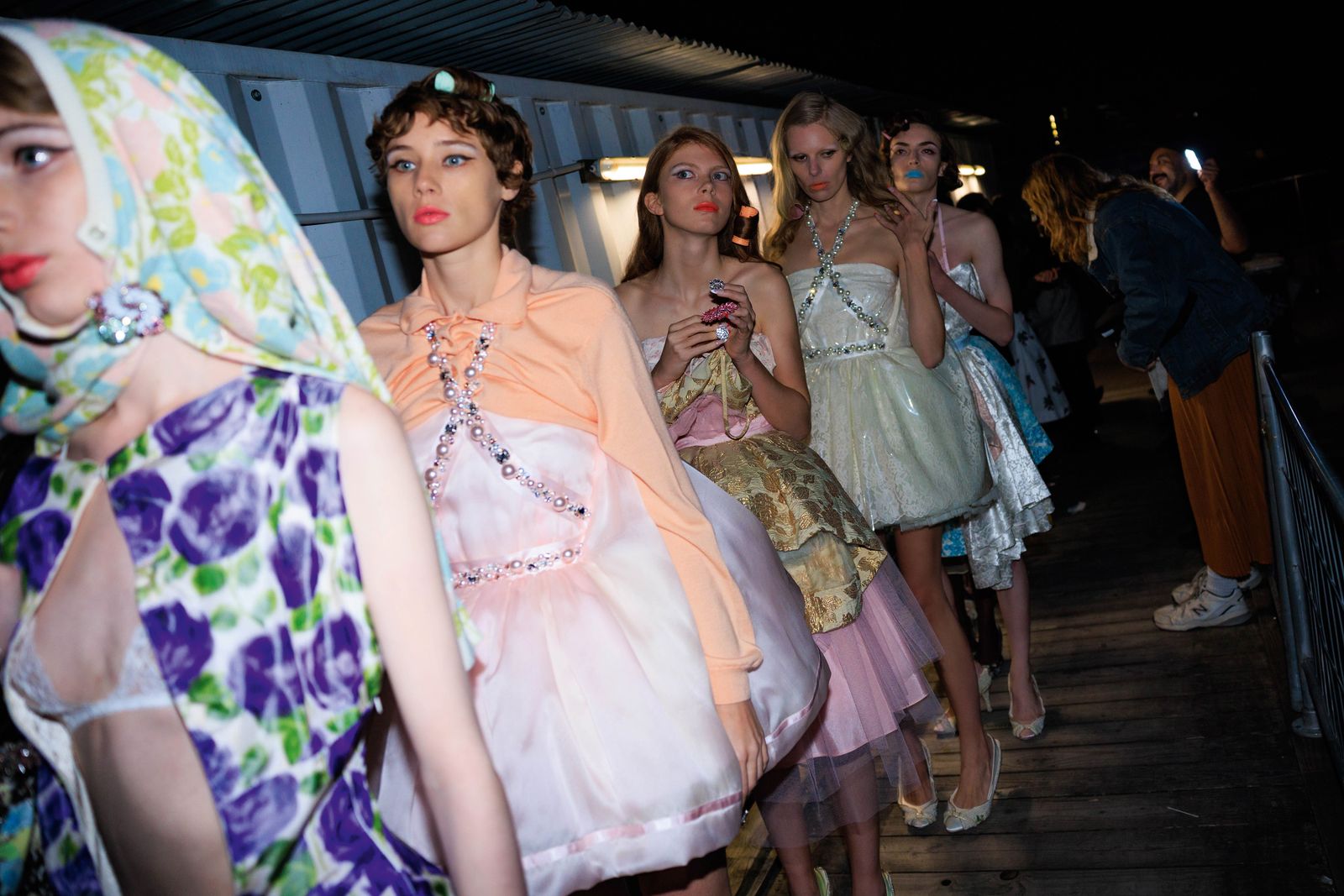
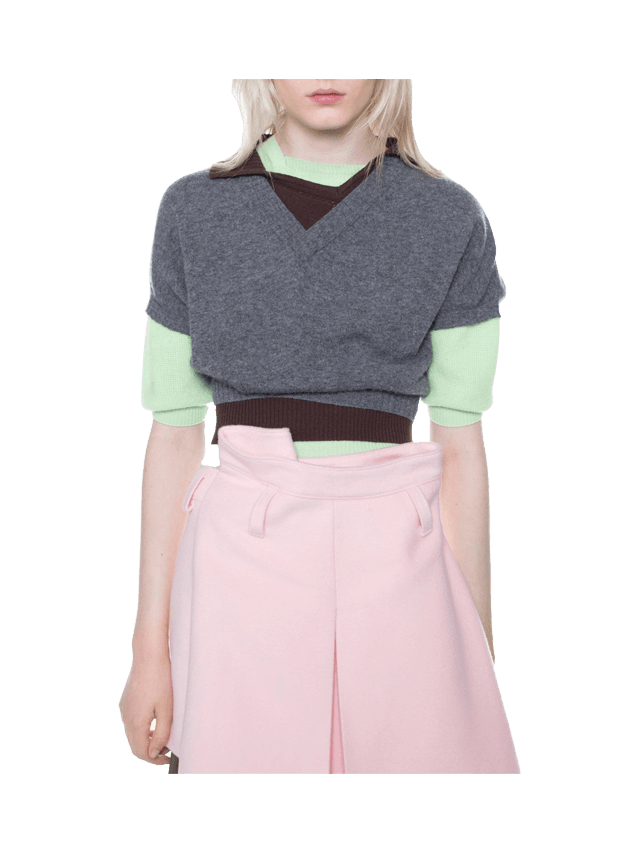
The clothes on the rail prove why. In the flesh, they lift my spirits, cure my hangover, clear my skin. A deliciously deranged cocktail dress is composed of crumpled twists of sugar-pink taffeta, overlaid with lace and spliced with chintzy metallic damasks and scrims of tulle. Cropped chestnut polo knits have side seams subbed out for zips that curl down and around the flank, from the back of the shoulder to the front of the hip; layered plaid shirts come with multiple necklines; a puffball skirt in ditsy floral organza floats beneath the rack like a jellyfish on a current.
The designers’ point of departure this season were the vintage bondage magazines they discovered on a research trip to Japan, filled with images of 1950s housewives bound in shibari ties. Immediately, they were drawn to the images’ inherent tension, both conceptually and literally: the subversion of an image of prim, domestic femininity and the literal twists and torsions caused by rope on cloth; the lifting of a shirt, a skirt. “Perfect moments of undoneness,” Barron calls them, with the collection “an attempt at trying to freeze them” – without the rigging expertise that the original images entailed, granted.
Beautiful and technically accomplished as these garments are, the indie brand’s hype is down to more than hanger appeal. Riding the Métro to my appointment, I’d scrolled through endless Instagram Stories of the show: a stream of artfully dishevelled housewives descending from a stage made up as a pastiche of a post-war American living room, strutting among the crowd and posing on raised platforms to frantic whoops and cheers; hair in swooping, lacquered coifs, covered in satin headscarves or with curlers still in; dewy skin, lips popping in crimson red, pastel pink and teal blue.
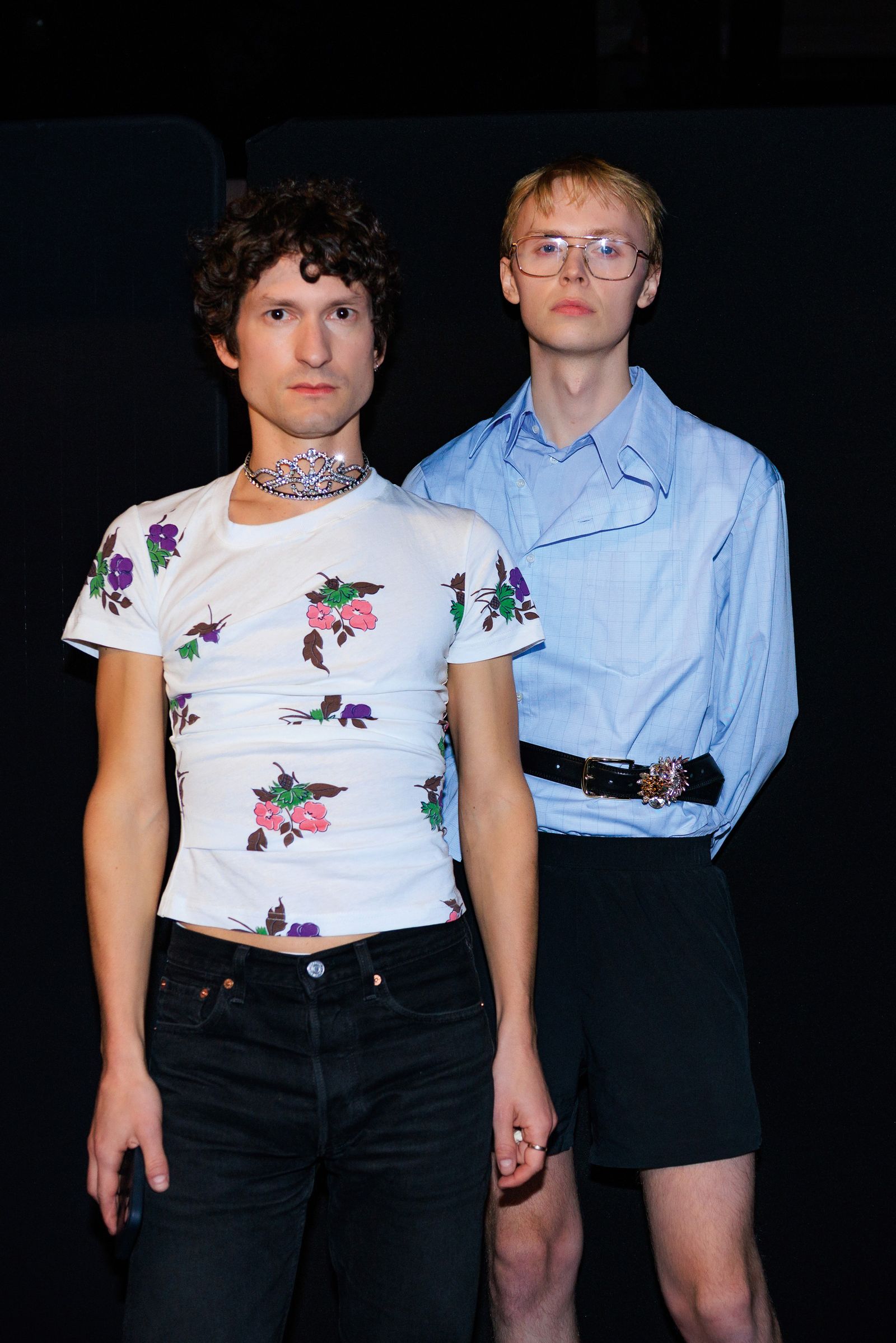
Each look was its own universe – or, rather, each girl was. Rather than flimsy tokens in a rehearsed treatise on the subversion of feminine archetypes (as is often the case with fashion that tries too hard to “say something”), each felt like a complete, complex, real person. “Familiar, but a bit unplaceable,” Vestbø says. “In all of our characters, there’s an attempt at representing a very specific ‘perfect’ image that is ultimately unachievable, and finding ways to undo that.”
While this season’s main character was the ’50s housewife, previous spectacles have taken us to skyscraper heights for a parade of dishevelled corporate girl bosses or to a basement club to witness the coming-undone of a past-her-prime pop star. Across the board, what underpins their relatability is a freeing “messiness”, the Norwegian designer continues. “There’s such a sense of joy in that.”
“Ben and August have always been expert world builders, creating a fantasy world by giving new context to references, found objects and familiar garments to propose something completely turned on its head,” says Nick Tran, head of buying and merchandising at Dover Street Market Paris and one of the brand’s earliest supporters. “As soon as I saw their work for the first time – a special collection for Maryam Nassir Zadeh’s store in New York [an epicentre of downtown cool] – I needed to know more: who are they? Where are they from? What’s their design process?”
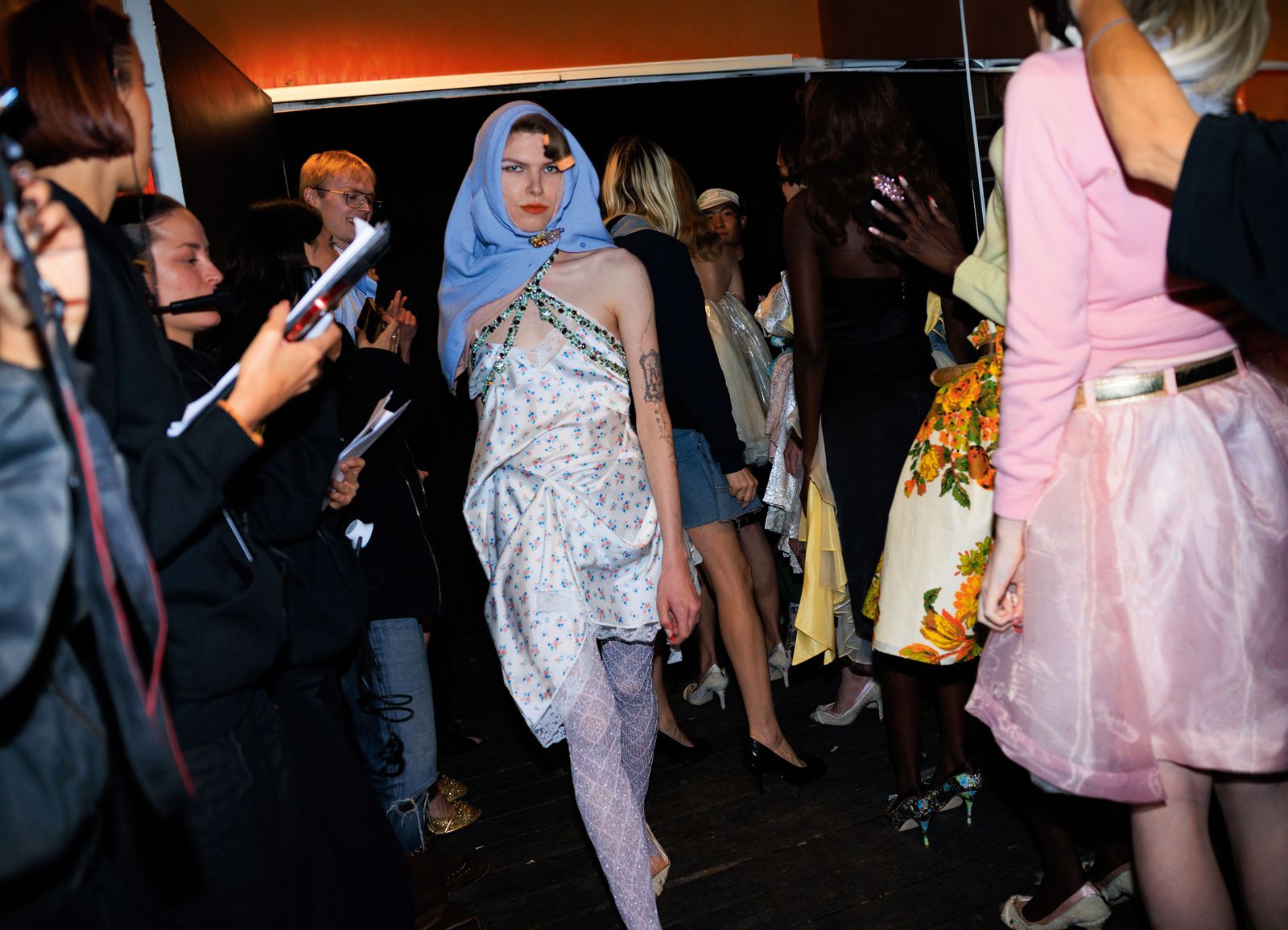
Even if August Barron’s is a world you’re discovering for the first time, Barron and Vestbø aren’t exactly new kids on the block. Until this season, they’d worked under the banner of All-In, a name that covered both their fashion practice and the experimental magazine they’ve been running for a decade. Starting life in New York, the magazine was founded by Barron while he was at Bard College in 2015, with Vestbø (then running an independent namesake label) coming on board shortly after the pair met at the magazine’s launch – both realised it made sense to formalise the blurring of their romantic and working relationships.
Rather than a desire to create product, All-In’s fashion output was motivated by a want to create clothes to shoot for the magazine’s pages, drawing upon the vintage archives they’d each been building since they were teens. “Instead of just styling them, though, we wanted to deconstruct them and turn them into new garments,” Vestbø says, resulting in the spliced, sculptural pieces that quickly caught the eyes of the likes of superstar stylists Haley Wollens and Lotta Volkova.
Fast forward to today – and hop across the pond to Paris, where they’ve been based for the past five years – their practice has expanded into August Barron, a fully fledged fashion business, and All-In, a parallel publication that serves as a crucial forum for the who’s who of a community that has bloomed around them. Arca, Caroline Polachek, Charli xcx, Alex Consani and JT are card-carrying members of its It-girl clan, while Smerz – the buzzy Copenhagen-based rock duo – provides music for their shows. Volkova styles the models, while make-up artist Thomas de Kluyver oversees an outré approach to beauty.
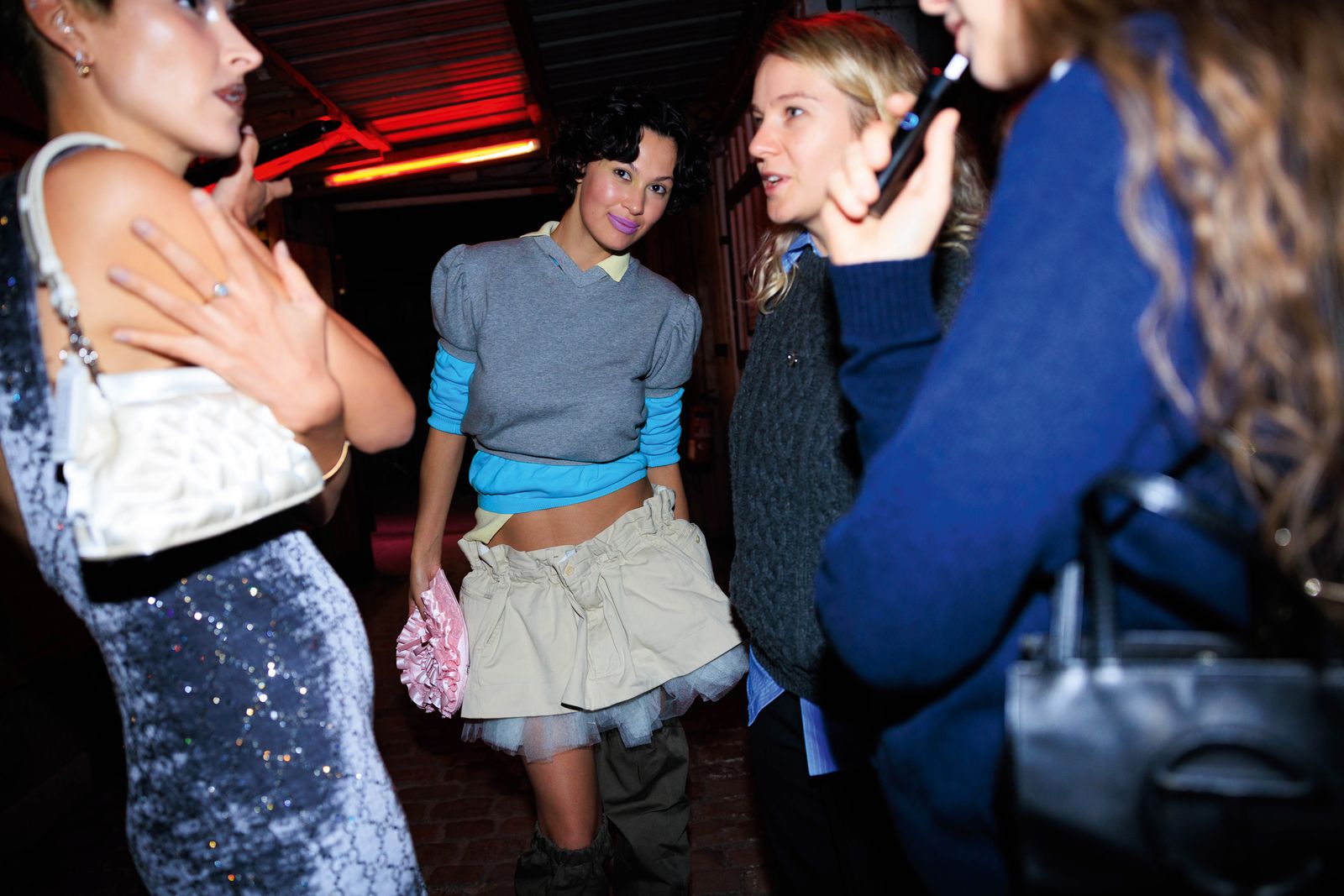
It’s a bit of a motley crew admittedly, but it’s a faithful reflection of what makes Barron and Vestbø’s perspective so distinct. “Ben and August talk about art in a kind of limitless way – they don’t separate between ‘high’ and ‘low’ culture, and always focus on what feels fun,” say Smerz’s Catharina Stoltenberg and Henriette Motzfeldt. “Their playful way of working with symbols and stereotypes has always inspired us; it gives their clothes both history and newness at the same time.”
This porousness also makes itself felt in their approach to collaboration. “Ben and August’s world is so authentically them, but also it’s a space that I feel they are very open to bringing people into,” says de Kluyver. “The boys are so collaborative but also unafraid; unapologetic and honest. I think it’s that blend of confidence and openness that allows you the space to create something unique.”
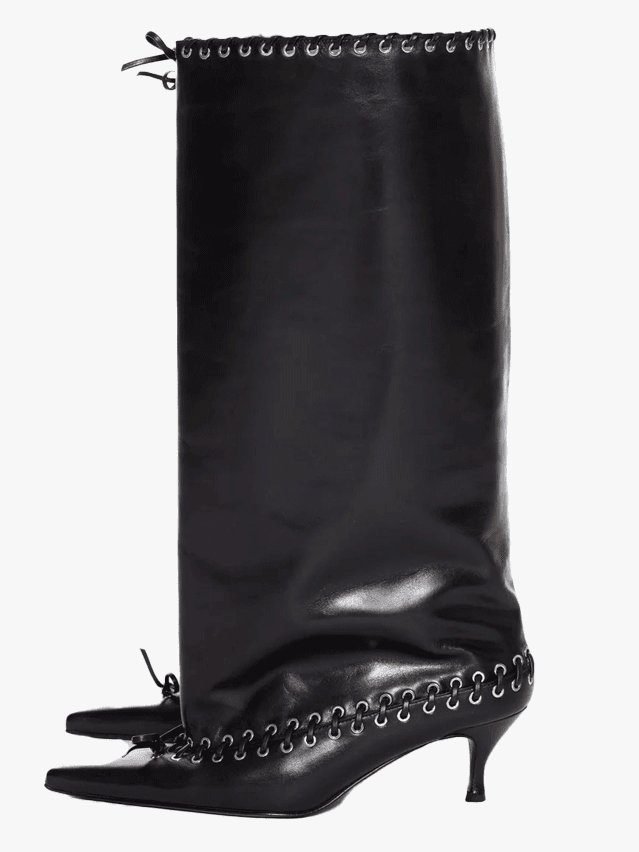
This year saw the pair reach the final of the LVMH Prize, however it bears noting that their rise is still relatively recent. While its roots stretch back a decade, it wasn’t until three years ago that Barron and Vestbø put out their first commercial product – the jag-toed, laced-up Level boot, seen on Rihanna’s feet soon after it launched. And it wasn’t until last year that they put out a full collection of clothes intended for production. “It’s all been very step by step, in a way,” Vestbø says. “Just a year and a half ago, we were still working from our living room.”
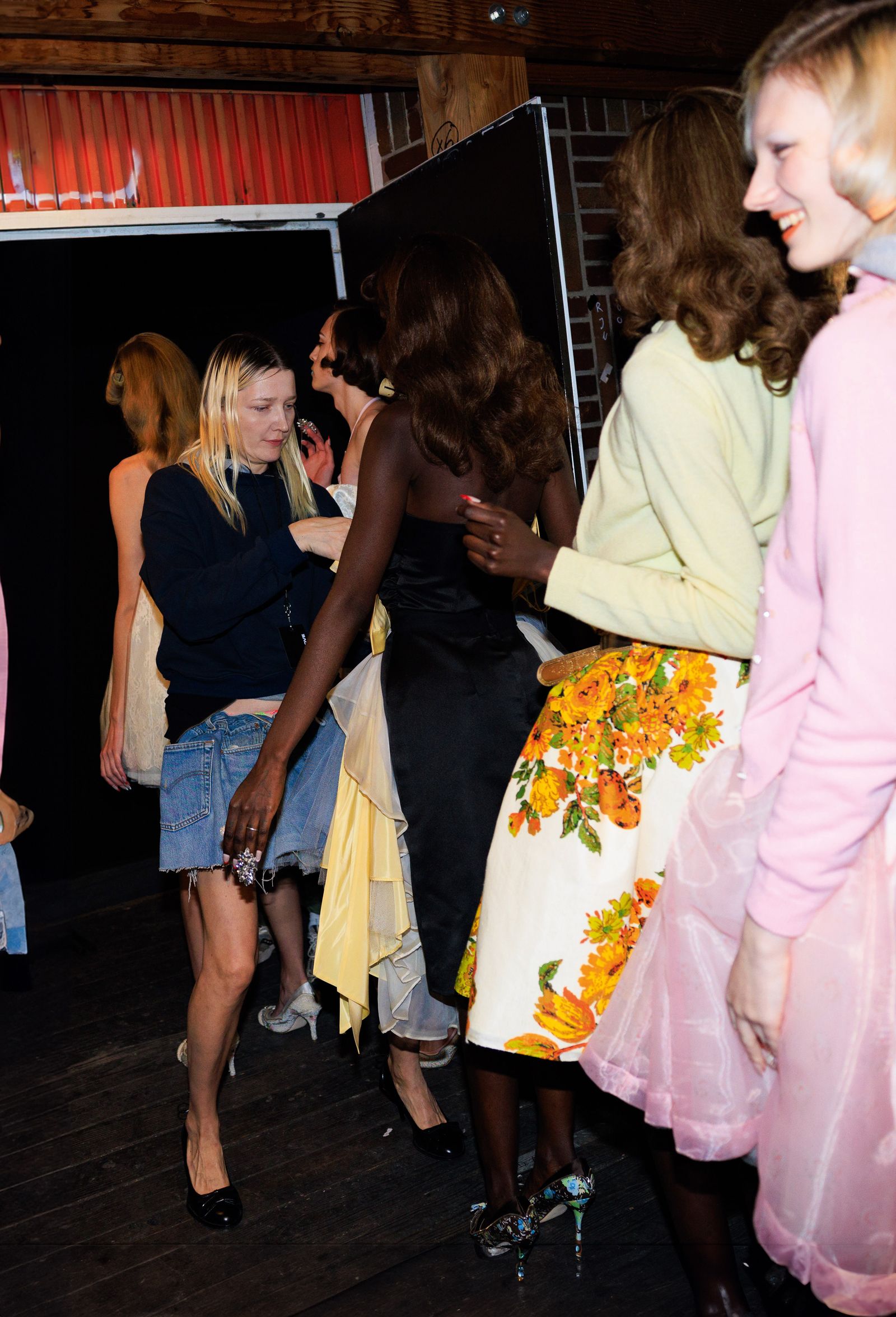
While it may sit at the vanguard of a new establishment, August Barron’s underground grit remains firmly in place. Nowhere was that clearer than at the show’s afterparty, held in the same cavernous hall. Seen from the street, you’d be hard-pressed to guess what would draw this mixed bag of art school kids in hand-me-down furs, pretty boys in muscle tees, industry-leading photographers and creative directors to the same room. What it is, though, is what my colleague described earlier: an “electric vibe” that tickles the nerves of anyone who cares to tune in. Plugged into the shared frequency, jacking my body in unison with the crowd as the Berlin-based photographer and DJ Lengua thrashes out a brutal techno set from the stage, I make myself a promise there and then: come traffic jam or Métro strike, whether by jet pack or on the back of a motorbike, I will be at the next August Barron show.